

Skip to content

Flight school · Bolivia · Based in Cochabamba

The world needs pilots. You can be one.

We have trained professional pilots since 2012. Study with certified instructors from any city in Bolivia.

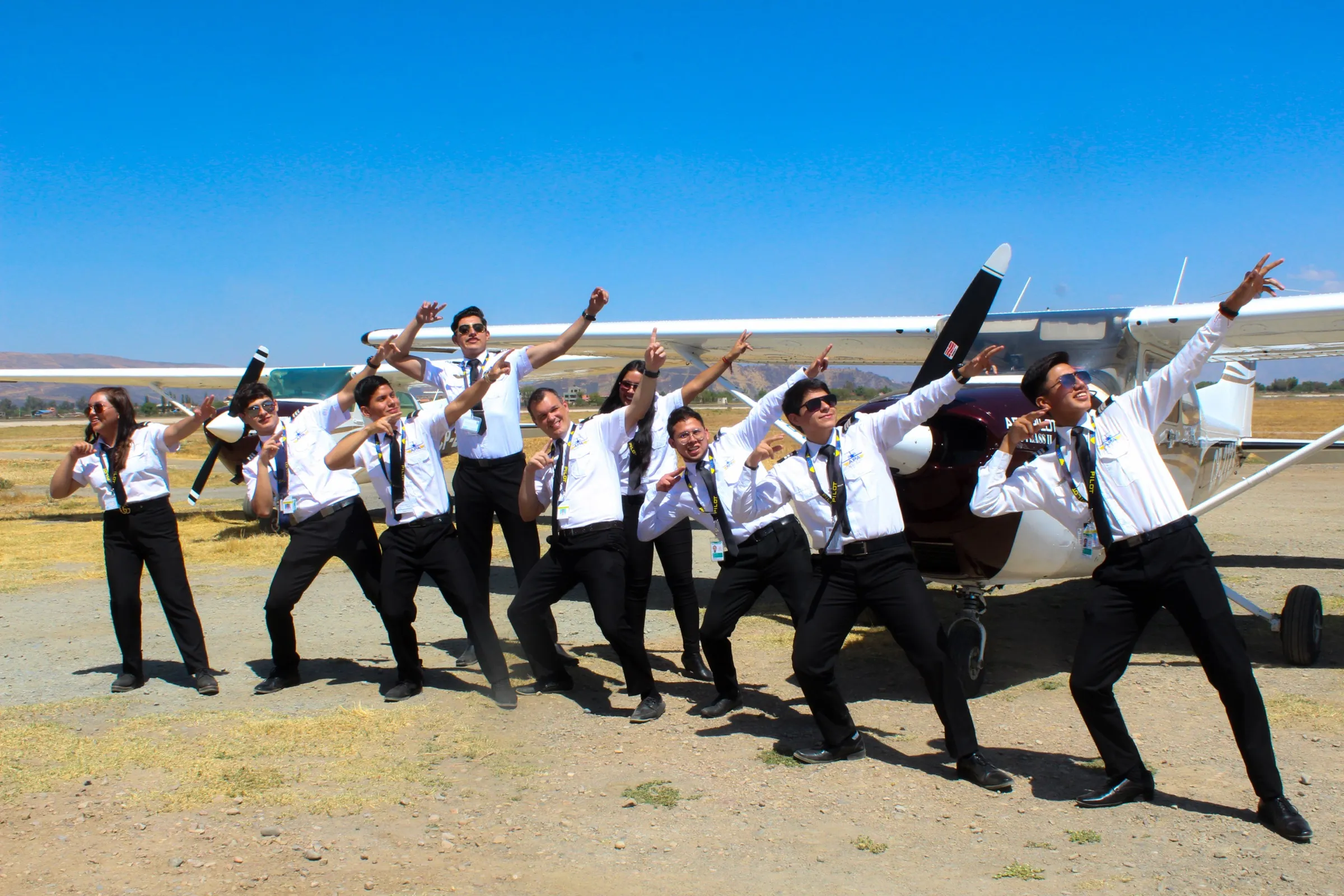
APA students in pilot uniforms posing in front of a Cessna aircraft at Cochabamba airport
New pilots worldwide
674,000

Boeing · 2026–2045

In Latin America alone
38,000

Boeing · 2026–2045

Training pilots since
2012

Cochabamba, Bolivia

Certification
CIAC Tipo 3

CCIAC-141-05-027

The opportunity

Aviation needs more pilots than are being trained.

Large groups of veteran pilots will retire over the next decade and fleets keep growing. Boeing projects that 674,000 new pilots will be needed worldwide over the next 20 years, and 38,000 in Latin America.

New aircraft for Latin America
2,405
Annual regional air traffic growth
4.1%
See the full analysis

New pilots needed · 2026–2045

By region, according to Boeing Pilot & Technician Outlook 2026

  1. Eurasia153,000
  2. China123,000
  3. North America122,000
  4. Middle East67,000
  5. Southeast Asia66,000
  6. South Asia48,000
  7. Latin America38,000
  8. Northeast Asia24,000
  9. Africa22,000
  10. Oceania11,000

Source: Boeing Pilot & Technician Outlook 2026. Worldwide total: 674,000 new pilots.

Your flight plan

From zero to professional pilot, step by step.

You do not need prior experience. You train in Cochabamba, whichever city you come from, and move forward in clear stages.

  1. 01

    Takeoff

    Private Pilot

    ≈ 7 monthsUSD 1,000

    You learn the fundamentals, log your first flight hours and earn your license.

  2. 02

    Climb

    Commercial Pilot · IFR

    ≈ 1 yearUSD 1,500

    You refine your technique, fly by instruments and earn the license that lets you fly for pay.

  3. 03

    Cruise

    Your career in the air

    From day 1

    With your license and a good level of aviation English, you are ready to apply to airlines and professional aviation.

The hangar

Love airplanes? You are home.

Aviation is in the air here. Learn to read the weather report the way a pilot does before every flight, and see what day-to-day life on the apron looks like.

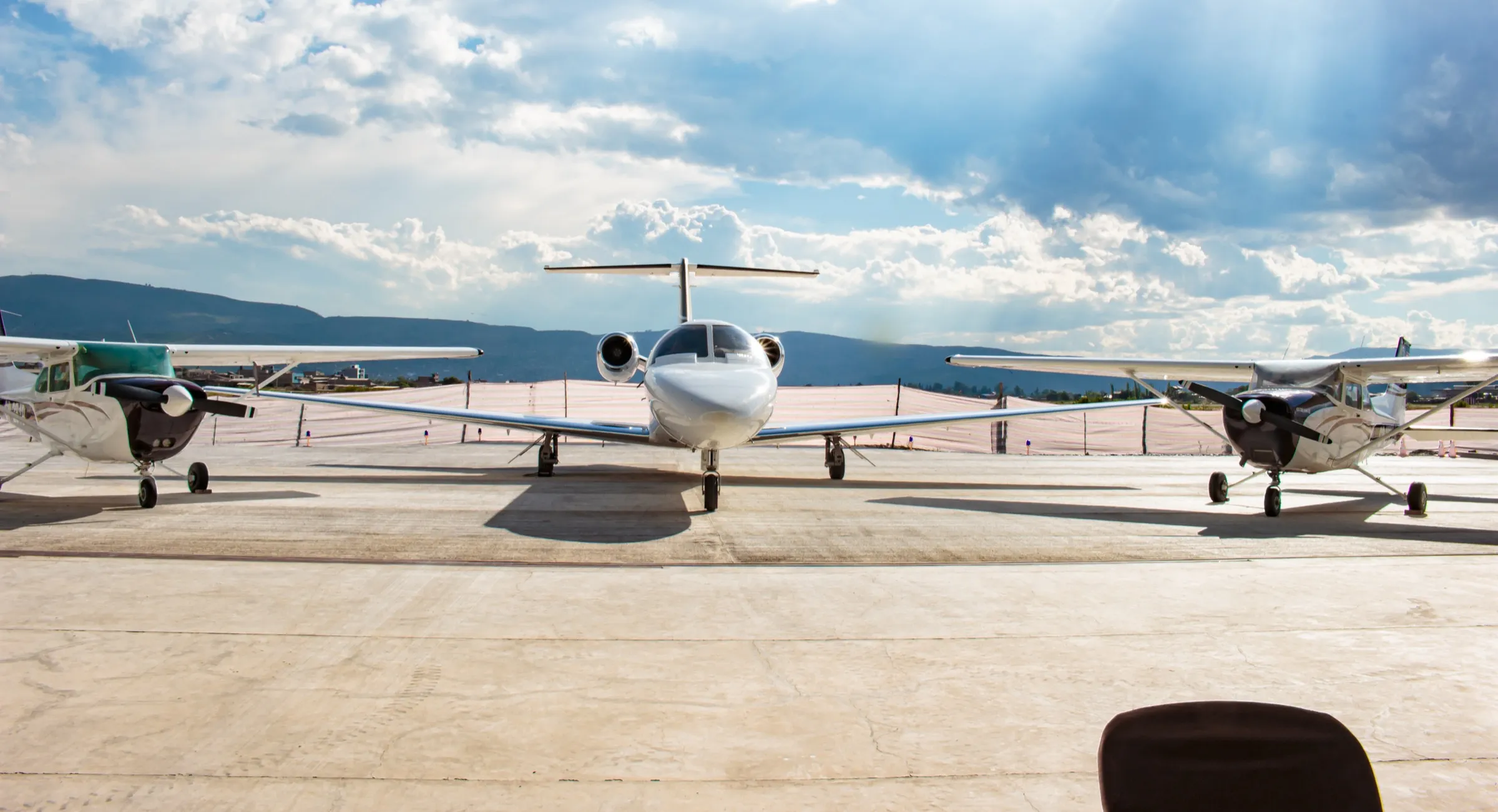
Two Cessna aircraft and a business jet parked on the apron at Cochabamba airport, with the mountains in the background
Apron · Cochabamba (SLCB)
Cockpit of a commercial jet: center pedestal with thrust levers and navigation displays
The office with the best view
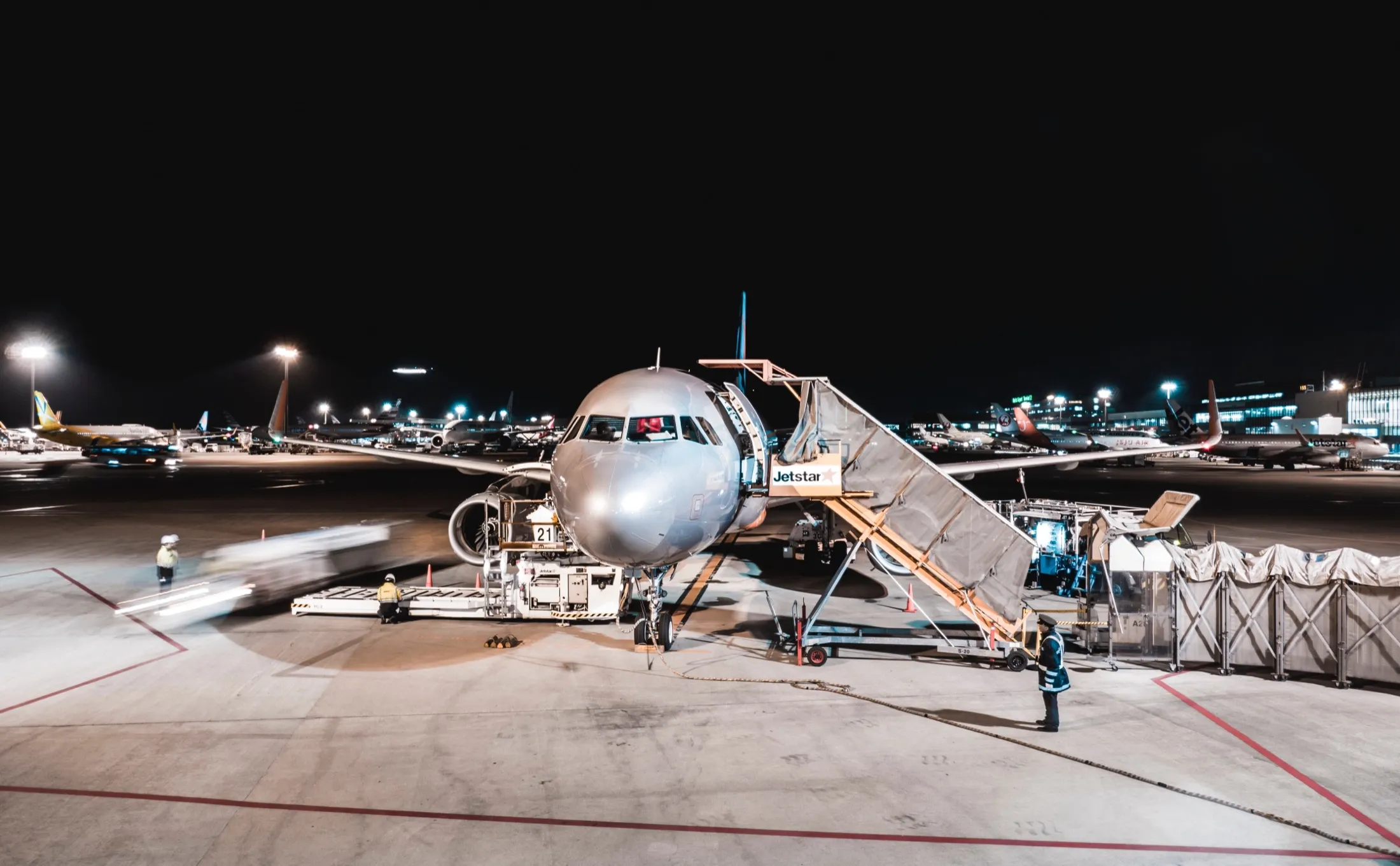
Passenger aircraft on an airport apron at night, surrounded by ramp staff
When the airport never sleeps

Learn to read a METAR

Before every flight, pilots check the METAR: the airport weather report, written in a compact, universal code. This is a real one from Cochabamba. Ready to decode it?

SLCB elevation
2,560 m

≈ 8,400 ft above sea level

Codes
SLCB · CBB

ICAO · IATA

Learning to fly at a high-altitude airport means understanding how thinner air changes aircraft performance. It is part of the trade.

Real example · SLCB21 Nov 2026 · 13:00Z

Tap each group of the report to decode it:

Report type

Routine weather observation of an aerodrome. It is normally issued every hour.

Our courses

Choose your route.

See all the details

PPL

Private Pilot

Your first step in the air

Introductory course to the civil pilot career. It is the foundation of everything: from here you go out to fly with your own license.

  • First flight toward the license
  • Instruction in a Cessna 172
  • Continue to Commercial IFR

Duration

≈ 7 months

Cost

USD 1,000

Ideal for

Those starting the career or who want to fly out of passion

CPL · IFR

Commercial Pilot – IFR

Fly like a professional

It trains the student pilot in the flight techniques and procedures needed to perform safely as a commercial pilot, in line with the proficiency levels set by the RAB.

  • Paid flying
  • IFR rating
  • Direct path to the airlines

Duration

≈ 1 year

Cost

USD 1,500

Ideal for

Private pilots aiming for the airlines

SMS

New

Basic SMS Course

Safety management

Understanding how the Safety Management System works lets your organization operate safely, managing potential risks and hazards.

  • 40 hours of training
  • For all aviation personnel
  • On request

Duration

40 hours

Not a recurring course: it opens on request

Cost

Ask us

Ideal for

Aviation personnel in general

FOI

FOI Instructional Techniques

Train instructors. Transform the future.

Course for pilots who want to become instructors: you learn to teach with method, from designing a lesson to applying it in practice.

  • Effective methodologies
  • Leadership and communication
  • Lesson design
  • Practical application

Duration

40 hours

Cost

USD 145

Ideal for

Pilots who want to become instructors

FOI · RECURRENT

FOI Instructional Techniques – Recurrent

Stay current as an instructor

If you are already an instructor, the RAB requires you to stay current and take this course every 24 months.

  • 20 hours of training
  • Required by the RAB every 24 months

Duration

20 hours

Taken every 24 months

Cost

USD 80

Ideal for

Instructors who must stay current

Costs in US dollars (USD). Write to us and we will explain what each program includes and the payment options.

40HOURS

New · Basic SMS course

Manage your organization’s operational safety.

Aimed at aviation personnel in general. Learn how the Safety Management System works so you can operate safely, managing potential risks and hazards. It is offered on request: it is not a recurring course.

For families

An important decision deserves clear answers.

We know that choosing a career is a decision for the whole family. This is what you should know.

Certified school

Civil Aviation Training Center (CIAC) Type 3 (CCIAC-141-05-027), with more than a decade training pilots in Cochabamba.

Safety first

Operational safety is our priority: we apply a Safety Management System (SMS) and promote voluntary hazard reporting.

A career with a future

Boeing projects 38,000 new pilots for Latin America over 20 years. It is a profession with sustained demand.

Frequently asked questions

Is APA authorized to train pilots?

Yes. Airline Pilot Academy is a Civil Aviation Training Center (CIAC) Type 3 (CCIAC-141-05-027), based in Cochabamba and operating since 2012.

How long does it take to become a commercial pilot?

The Private Pilot course takes about 7 months and the Commercial IFR Pilot course about 1 year. They are consecutive stages: you start with your private license and move on to the commercial one, which is the one that allows you to fly for pay.

Are there jobs for pilots?

Projected demand is high: Boeing estimates 674,000 new pilots worldwide between 2026–2045, 38,000 of them in Latin America. No school can guarantee a job, but the right training puts you in one of the professions with the greatest need for talent.

What do I need to get started?

Age, medical certificate and documentation requirements are set by the Bolivian Aeronautical Regulations (RAB). Message us on WhatsApp and we will guide you step by step according to your situation.

Do I need to know English?

English is the language of aviation, and ICAO requires pilots to demonstrate a minimum level of language proficiency to operate internationally. A good level of English will open many more doors in the profession.

How much does it cost?

Private Pilot: USD 1,000. Commercial Pilot: USD 1,500. FOI Instructional Techniques (40 hours): USD 145. FOI Recurrent (20 hours): USD 80. For the Basic SMS Course, contact us. Write to us and we will explain what each program includes and the payment options.

How safe is the training?

Safety is our priority. We apply a Safety Management System (SMS) and encourage a hazard-reporting culture: anyone can report a risk, voluntarily and anonymously.

Can I switch schools if my current school does not schedule my flights?

Yes. At APA you can continue your training through the conversion of your pilot course. Write to us with your situation, we review what you have already completed and tell you how to continue.

Can I study if I live in another city in Bolivia?

Yes. Practical instruction takes place in Cochabamba; write to us and we will advise you on how to organize your schedule and your stay.

Take the first step

Ready for takeoff?

Tell us your goals and we will explain how to get there: courses, requirements, timing and cost. No commitment.